Morning light therapy methods for rotating shift workers
You finish your overnight hours, pull the curtains, and lie down. But sleep won’t come because your body still thinks it’s daytime. This struggle is real for many people with changing schedules.
Bright illumination plays a powerful role in regulating your internal clock. Exposure to specific types of artificial brightness can help signal your brain to stay alert or prepare for rest. This approach uses timed exposure to reset your circadian rhythm.
Our guide walks you through practical steps that actually work. You’ll learn how brightness affects melatonin, when to use special lamps, and how to combine these methods with blackout curtains. The focus stays on realistic solutions for small spaces and busy lives.
Every recommendation comes from real research, presented with respect for your time and safety. This isn’t about miracle cures – it’s about steady, practical relief for people who work when others sleep.
Understanding the Challenges of Rotating Shift Work
The constant battle between your body’s natural rhythms and your work schedule can feel like an endless tug-of-war. About 20% of people in industrialized nations work nonstandard hours. Their bodies pay a heavy price for this lifestyle.
Sleep disruptions and health risks
Your body relies on predictable light and dark cycles. These cycles regulate hormone release, digestion, and alertness. Rotating schedules constantly disrupt this delicate balance.
Research shows 10-38% of shift workers experience shift work disorder. This condition brings excessive sleepiness during work hours and insomnia when trying to rest. The consequences extend far beyond simple fatigue.
Long-term sleep deprivation raises serious health risks. Studies link irregular schedules to heart disease, type 2 diabetes, and certain cancers. Your body wasn’t designed for this constant schedule shifting.
Common sleep disorders among shift workers
Many people on changing shifts develop clinical sleep disorders. Insomnia makes falling asleep or staying asleep nearly impossible. Circadian rhythm disorders create daily battles with your internal clock.
Mental health also suffers significantly. Depression and anxiety rates are higher among night and rotating shift workers. The isolation and biological disruption create a perfect storm for psychological strain.
Understanding these challenges helps you find realistic solutions. Learning how to reset your sleep after demanding hours becomes essential for long-term wellbeing.
The Science of Circadian Rhythms and Light Therapy
There’s a biological clock inside you that runs on a 24-hour schedule, synchronized by environmental cues. This internal timing system governs when you feel alert and when you need rest.
How light affects melatonin and alertness
Your brain’s suprachiasmatic nucleus acts as the master timekeeper. It coordinates hormone release based on brightness signals received through your eyes.
Special cells detect blue wavelengths and send messages to this control center. Bright exposure suppresses melatonin production while boosting cortisol levels.
This natural process helps you feel awake during daytime hours. As darkness falls, melatonin production increases to prepare your body for rest.
| Light Source | Intensity | Melatonin Effect | Best Timing |
|---|---|---|---|
| Natural Sunlight | 10,000-100,000 lux | Rapid suppression | Upon waking |
| Light Therapy Box | 10,000 lux | Controlled suppression | 30-60 minutes |
| Standard Indoor Lighting | 200-500 lux | Minimal effect | Consistent exposure |
Artificial brightness can mimic natural daylight patterns. This approach helps reset your internal clock when your schedule conflicts with natural cycles.
Some workers wonder if they should night shift workers take melatonin alongside brightness strategies. Understanding how these systems interact helps make informed decisions.
Benefits and Mechanisms of Morning Light Therapy
Waking up alert after an unconventional sleep schedule is the primary goal of this approach. It works by resetting your internal clock. Timed exposure to bright illumination after you wake up tells your brain it’s time to be active.
This signal suppresses melatonin, the hormone that makes you feel sleepy. It helps you feel more awake when you need to be.
Boosting alertness during nontraditional hours
Using a special lamp before your shift begins can make a significant difference. A session of 20 to 30 minutes helps keep melatonin levels low. This supports mental sharpness and reduces fatigue during work.
Studies involving nurses on changing schedules show promising results. Properly timed bright exposure was linked to a major drop in work errors. It also helped people feel less tired.
The group receiving evening light exposure to improve circadian alignment reported a 67% reduction in errors and reduced fatigue.
Improving overall sleep quality
The benefits extend to your rest period. By aligning your rhythm, it becomes easier to fall asleep when you get home. You spend less time tossing and turning.
Better rest quality means improved focus and safer commutes. It also lowers the risk of health issues linked to long-term sleep loss. Consistency is key for seeing these positive effects.
Your specific schedule will influence the outcome. But the potential for better sleep is substantial.
Morning light therapy for rotating shifts: A Practical Guide
Resetting your internal rhythm requires a systematic approach to when you receive bright signals. The timing of your exposure makes all the difference in aligning with your work hours.
Begin by mapping your current sleep pattern against upcoming shifts. This tells you whether to advance or delay your body clock.
Step-by-step process to adjust your schedule
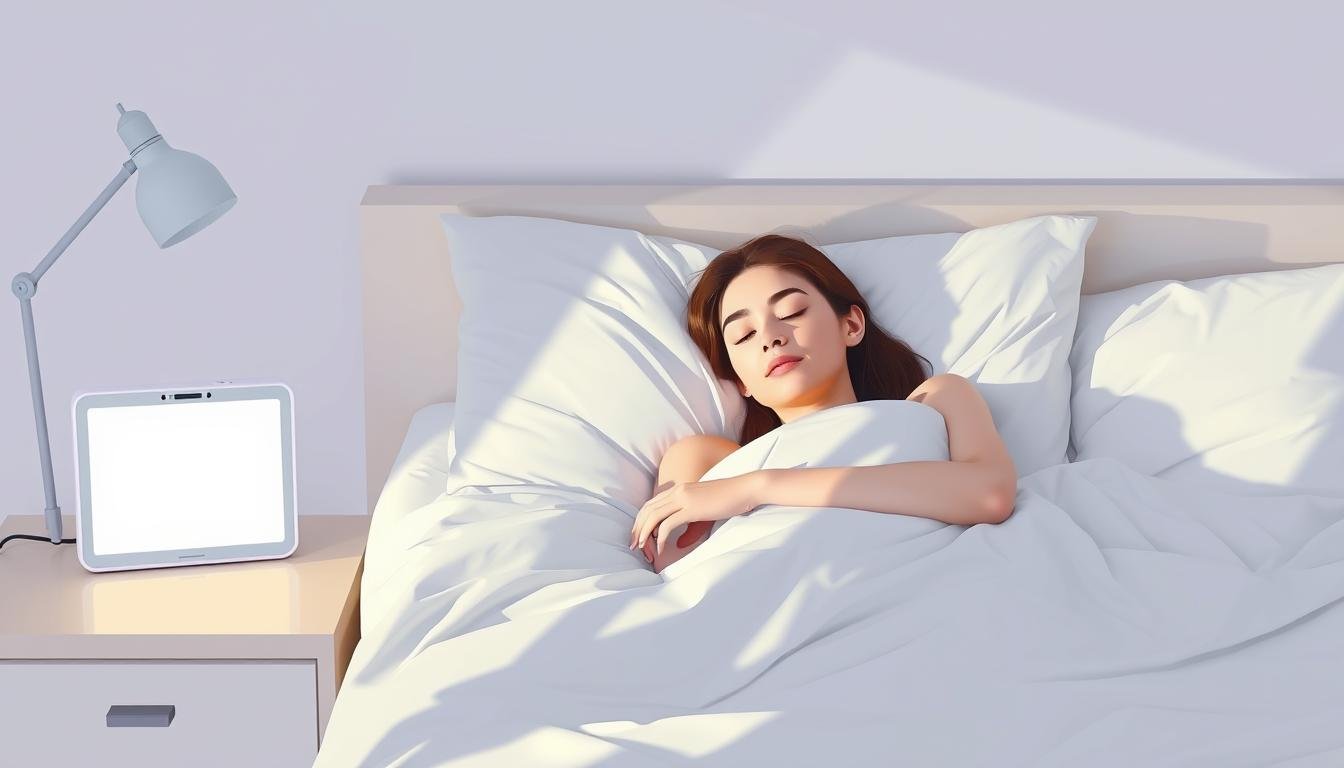
For transitioning to day shifts after nights, use your device shortly after waking. Sit 16-24 inches away with it angled toward you. Let the illumination reach your peripheral vision without staring directly.
Consistency builds results. Use it at the same time each morning to train your brain’s melatonin release. This helps you fall asleep earlier when needed.
When moving from day to night shifts, consider evening exposure instead. This delays your internal clock to help you stay awake later. Small adjustments work better than sudden changes.
- Shift your bedtime by 15-30 minute increments every few days
- Track your alertness and rest quality in a simple journal
- Combine with blackout curtains and screen limits before bed
These steps create a foundation for better adaptation. Learning how to reset your sleep after demanding hours becomes manageable with this approach.
Creating an Optimal Light Environment for Shift Workers
Finding the proper tools can make the difference between struggling and thriving on changing schedules. Your equipment choices directly impact how effectively you can reset your internal clock.
Choosing the right light box and device features
Not all devices deliver the same results. Look for units that emit at least 10,000 lux intensity. This matches outdoor illumination about an hour after sunrise.
Regular indoor lighting provides only 500 lux. This is too dim to influence your circadian rhythm effectively. Dedicated equipment is essential for real change.
| Device Type | Lux Intensity | Key Features | Best For |
|---|---|---|---|
| Basic Light Box | 10,000 lux | UV filter, adjustable angle | Budget-conscious users |
| Advanced Therapy Lamp | 10,000-12,000 lux | Color temperature control, timer | Precise rhythm adjustment |
| Portable Device | 5,000-7,000 lux | Compact design, battery option | Travel or small spaces |
Timing your light exposure effectively
Consistency matters more than intensity. Use your device at the same time daily for 20-30 minutes. This builds a reliable signal for your brain.
Position the unit 16-24 inches away. Angle it downward so illumination enters your eyes from above. Never stare directly into the brightness.
Combine sessions with routine activities like reading or eating. This makes the practice sustainable long-term.
Integrating Cognitive Behavioral Strategies for Better Sleep
Combining mental approaches with environmental adjustments creates powerful sleep support for unconventional schedules. These strategies help your mind and body recognize when it’s time to wind down.
Establishing healthy sleep hygiene routines
Consistency matters most for quality rest. Stick to the same sleep-wake schedule even on days off. This reinforces your circadian rhythm.
Create a calming pre-sleep routine. Dim the lights, take a warm shower, or listen to soothing music. These actions signal your brain that rest is coming.
| Strategy | Benefit | Time Required | Effectiveness |
|---|---|---|---|
| Consistent Sleep Schedule | Reinforces circadian rhythm | Daily commitment | High |
| Pre-Sleep Relaxation | Reduces stress | 10-15 minutes | Medium-High |
| Screen-Free Time | Protects melatonin | 1-2 hours before bed | High |
| Sleep Environment | Minimizes disruptions | One-time setup | Medium |
Relaxation techniques to complement light therapy
Practice deep breathing or progressive muscle relaxation before bed. These methods quiet racing thoughts after a stressful day.
Avoid electronic screens for at least one hour before sleep. The blue light suppresses melatonin production. Instead, read a book or listen to calming music.
Studies show cognitive behavioral approaches improve sleep quality significantly. When you understand the best time to use light therapy, you can combine it with these mental strategies for better results.
Comparing Pharmacological and Non-Pharmacological Interventions
Navigating sleep solutions for irregular hours means weighing different approaches carefully. Each option has distinct benefits and limitations for your specific situation.
Pros and cons of melatonin and light therapy
Melatonin supplements can help you fall asleep during daytime hours after working overnight. They mimic your body’s natural sleep hormone. However, they don’t improve alertness during your next work period.
Prescription medications like modafinil offer another path. They can boost wakefulness when taken before your shift begins. But they don’t fully restore alertness to safe driving levels.
These drugs also carry risks of side effects and dependence. Sleep aids may help you fall asleep but can leave lingering drowsiness.
Bright illumination treatment provides a non-drug alternative. It has no risk of tolerance or residual effects. Research shows significant improvements in sleep quality with this approach.
The best strategy often combines illumination methods with other non-pharmacological supports. Reserve medications for short-term use under medical guidance when needed.
Leveraging Lifestyle Modifications: Diet, Exercise, and Relaxation
Your daily choices about food and movement play a surprisingly large role in how well you sleep after work. These habits form a foundation that supports other strategies.
They help stabilize your energy and signal your body it’s time for rest.
Enhancing overall health for better sleep outcomes
Eating well is crucial for stable energy. Choose whole foods like fruits, vegetables, and lean proteins. Avoid sugary snacks that cause energy spikes and crashes.
This helps you feel more steady during your shift and wind down easier afterward.
Physical activity is another key piece. Regular exercise improves sleep quality. But timing matters—finish intense workouts a few hours before you plan to rest.
If your job is physically demanding, gentle walks or stretching may be better than a hard gym session.
Strategic caffeine use can aid alertness. Have your last coffee or tea at least four to six hours before sleep. This prevents interference with falling asleep.
Relaxation techniques before bed are vital. Try deep breathing or meditation to calm your mind after a stressful night shift. As noted in a recent analysis, combining these approaches offers the best results for shift workers.
These lifestyle changes are a powerful part of managing your health. They reduce the risk of accidents and support long-term well-being.
Insights from Recent Research and Meta-Analyses>
Large-scale research studies now confirm what many shift workers experience firsthand. Scientific analysis provides concrete evidence for managing sleep on changing schedules.
These comprehensive reviews examine what actually works for people with unconventional hours.
Key findings from studies on shift work disorder
A major analysis of 30 studies involving nearly 2,000 night shift workers revealed important patterns. All sleep interventions showed moderate positive effects on rest quality.
Bright illumination treatment demonstrated the strongest results. It achieved a large effect size meaning meaningful improvements in how well people slept.
Cognitive behavioral approaches also showed significant benefits. This suggests combining methods works better than single solutions.
Approximately 10-38% of workers experience clinical shift work disorder according to research. But targeted interventions can reduce symptoms effectively.
Understanding light therapy protocols from clinical data
Recent trials provide specific guidance for application timing and duration. A 2023 study with 57 nurses found evening exposure reduced errors by 67%.
Another project showed wearing special glasses for eight weeks improved both sleep quality and duration significantly.
Some studies show conflicting results depending on shift patterns and consistency. This highlights the need for personalized approaches.
The research confirms that non-drug interventions like light therapy offer sustainable solutions for long-term sleep challenges faced by workers.
Success Stories: Real-Life Experiences with Light Therapy
Real stories from healthcare professionals show what’s possible with consistent effort. These accounts come from people who understand the struggle of unconventional hours.
Testimonials from night shift workers and nurses
One nurse shared how using a special lamp after her night shift helped her fall asleep faster. She felt more rested before her next rotation began.
A manufacturing employee on overnight work reported better alertness during his shift. Timed exposure helped reduce drowsy driving incidents after long hours.
Healthcare workers in studies noticed improvements in sleep patterns and mood. This directly impacted their ability to focus during critical tasks.
As one user explained, “This approach almost completely changed my winter mood. Living with minimal sunlight was challenging before finding this solution.”
These experiences demonstrate that better rest is achievable. Learning how to reset your sleep after demanding hours becomes more manageable with real examples.
The key is consistency and combining methods. Small, steady changes lead to meaningful improvements in daily life for people on changing schedules.
Safety Considerations and Managing Potential Side Effects
While generally safe, any approach to managing your internal clock deserves careful consideration of potential reactions. Most individuals tolerate bright illumination treatment well when following proper guidelines.
Recognizing and mitigating side effects
Some people experience mild reactions like eye strain or headaches. These side effects often occur when sessions are too long or the device is too close.
Starting with shorter sessions helps your body adjust. If you feel jittery, reduce the duration or move the unit further away. These adjustments usually resolve minor discomfort.
Best practices in safe light therapy use
Consult your doctor before beginning, especially with certain health conditions. This includes bipolar disorder, where intense exposure might trigger mood changes.
Those with eye conditions or taking photosensitive medications should seek medical advice. Ensure your device filters UV rays to protect your vision.
Begin with 10-15 minute sessions and gradually increase. Position the unit at eye level without staring directly. Consistency and proper timing yield the best results for your sleep quality.
Conclusion
Finding restful sleep after demanding hours requires more than just closing your eyes. It involves a consistent, patient approach. Your dedication to this process is the most important part of improving your rest.
Combining timed bright exposure with healthy habits creates a powerful routine. This method helps your body adapt to an irregular schedule. It supports both your immediate alertness and long-term health.
Remember that change takes time. Stick with your new habits even when progress seems slow. Small, daily actions build toward lasting results.
If challenges persist, consider seeking professional advice. A doctor can offer personalized guidance. Learning how to reset your sleep is a journey worth taking for your well-being.
You have the power to reclaim your rest. Use these strategies to build a sleep schedule that works for your life.