How to darken a bedroom on a budget for shift worker rest
Coming home after a long night shift feels like a battle. The sun is up, but your body desperately needs deep rest. That bright light pouring into your space keeps your brain alert and awake when it should be shutting down.
This guide is for you. We understand that quality sleep during the day is not a luxury; it’s a necessity for your health and safety. Light blocks your body’s natural sleep signals, disrupting your internal clock.
You do not need expensive, custom blackout systems. Real darkness is achievable with simple tools and smart layering. We focus on methods that respect your time and your wallet.
Think about basic window treatments, small fixes around frames, and practical accessories. Each option we explore can be completed in an afternoon. You can find the supplies at any local hardware store or online retailer.
Our goal is simple. By the end, you will know which solution fits your specific room, schedule, and finances. Finally, you can get the restorative rest your body craves after those demanding hours.
Understanding the Benefits of a Dark Bedroom Environment
When your work schedule conflicts with the sun’s cycle, achieving quality sleep becomes a daily challenge. Light exposure during your rest hours directly impacts your body’s natural processes.
Experts emphasize the critical role of darkness for restorative sleep. Dr. Michael Breus explains that light hitting your eyes signals the brain to stop melatonin production.
Impact on Melatonin Production and Sleep Quality
Melatonin regulates your sleep-wake cycle. Without complete darkness, your brain struggles to produce this essential hormone.
Even small amounts of light can disrupt your rest. Streetlights or morning sun tell your body to wake up, even after a twelve-hour shift.
Research confirms that blocking light improves sleep quality. It helps you fall asleep faster and stay asleep longer.
| Light Exposure Level | Melatonin Production | Sleep Quality Impact |
|---|---|---|
| Complete Darkness | Optimal | Deep, restorative sleep |
| Moderate Light | Reduced by 50% | Frequent awakenings |
| Bright Light | Nearly stopped | Difficulty falling asleep |
Why Shift Workers Need a Darker Room
Nurses, drivers, and factory staff face unique sleep challenges. They need deep rest during daylight hours when natural light floods through windows.
Creating darkness becomes a practical necessity for safety and focus. Your circadian rhythm needs clear signals that it’s time to rest, regardless of the sun’s position.
For those working irregular hours, a proper sleep reset after night shifts depends on environmental control. Darkness helps your body adjust to demanding schedules.
Even electronics or door cracks can disrupt your precious rest time. Understanding why darkness matters is the first step toward real relief.
Essential Tools: Blackout Curtains, Window Films, and Shades
Effective window treatments form the foundation of a restful sleep environment for shift workers. They block external light sources that disrupt your body’s natural sleep signals.
Lisa Artis from The Sleep Charity notes that blackout curtains offer significant light protection. They also help regulate room temperature throughout the year.
Choosing the Right Blackout Curtains and Blinds
The main difference between blackout curtains and blackout shades is their installation. Curtains hang from a rod above your window, while blinds mount directly on the window frame.
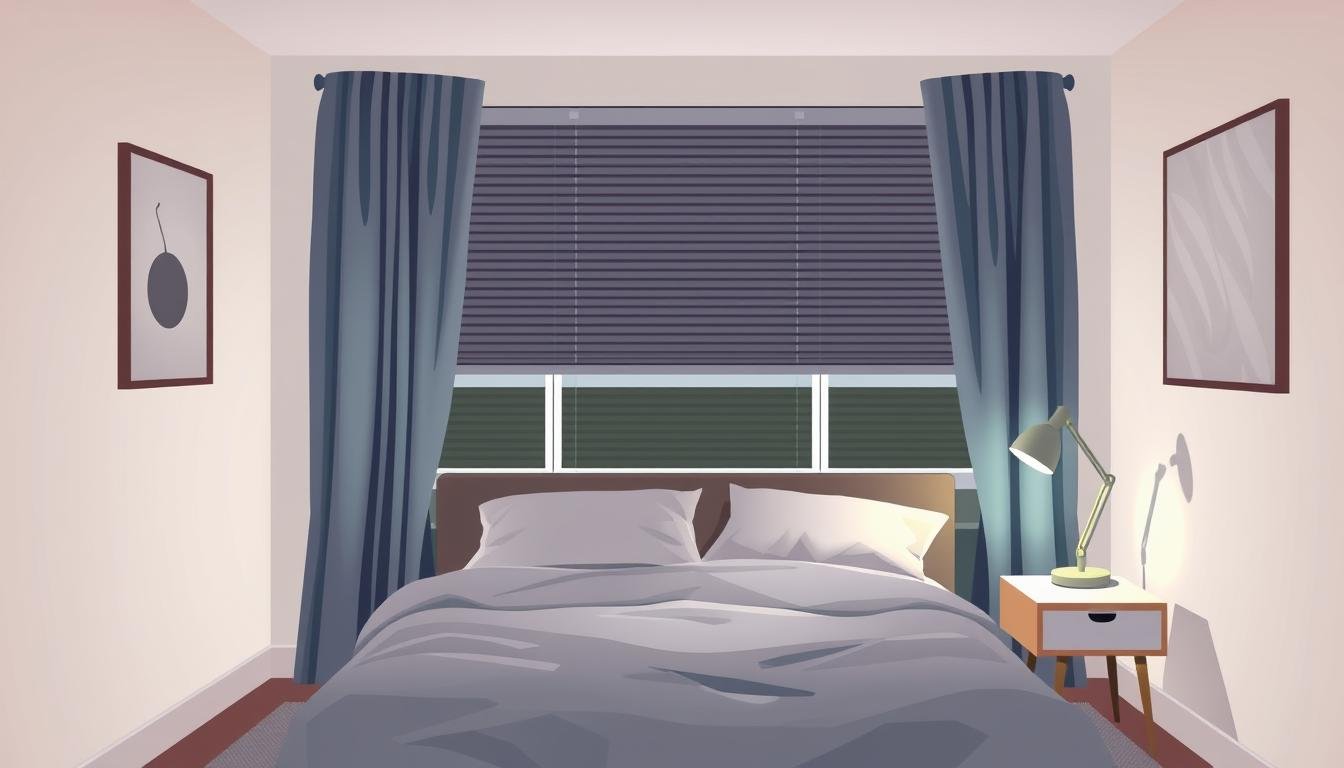
For maximum darkness, ensure your curtains extend three to four inches beyond the window edges. This prevents light from sneaking around the sides.
Layering Treatments for Complete Darkness
Combining multiple treatments creates the most effective blackout solution. Pair blackout curtains with window film or blinds for double protection.
When installing blackout blinds in recessed windows, mount them outside the recess. This allows you to oversize the blind and cover edge gaps.
| Treatment Type | Installation | Light Blocking | Best For |
|---|---|---|---|
| Blackout Curtains | Curtain rod above window | Excellent | Large windows, temperature control |
| Blackout Blinds | Window frame or recess | Very Good | Neat appearance, precise fit |
| Window Film | Applied directly to glass | Good (when layered) | Heat reduction, additional layer |
Darker colored curtains with thick lining provide the best light blockage. Choose sturdy rods that can support the weight of quality blackout materials.
How to darken bedroom on a budget
Creating an ideal sleep environment doesn’t demand excessive spending. Practical blackout solutions exist for every price range.
Budget-Friendly Window Treatment Options
Start with affordable blackout curtains from major retailers. These panels often cost thirty to fifty dollars each. They provide excellent light blockage for your window.
For a custom fit, purchase blackout fabric by the yard. Hang it over existing curtains using clip rings. This solution costs less than tailored treatments.
Temporary paper shades offer another cheap option. Cut them to size and attach with adhesive strips. Perfect for renters or frequent movers.
Shawna Robins, author of Powerful Sleep, recommends non-blue light LED bulbs. “They give a warm glow similar to sunset,” she notes. “These bulbs don’t block melatonin production.”
Portable blinds with velcro edges work well for temporary housing. They install quickly and pack flat for travel. Always measure your window before purchasing any treatment.
Layering window film adds extra protection. Apply it directly to glass for heat reduction too. This way you block light effectively without high costs.
Managing Light from Electronics and Doorways
Managing internal light sources is just as important as blocking external light for quality rest. Even small glows from devices or doorways can signal your brain to stay alert.
Covering and Turning Off Electronic Devices
Electronic devices emit enough light to disrupt your circadian rhythm. Phones, tablets, and alarm clocks keep your brain active when it should rest.
The simplest solution is leaving your phone outside the room. Use a basic alarm clock instead. If the clock face glows, turn it away from your bed.
For devices that must stay in your space, cover them completely. Place them in a drawer or use blackout tape over indicator lights. This helps block light effectively.
Shawna Robins advises, “Charge electronics outside the bedroom. Use night mode settings to minimize blue light exposure before sleep.”
| Light Source | Common Issue | Simple Solution |
|---|---|---|
| Phone/Tablet | Notifications and screens | Leave outside room |
| Alarm Clock | Glowing display | Face away from bed |
| Charging Lights | Small indicator lights | Cover with tape |
| Laptop | Sleep mode lights | Store in closed area |
Blocking Light from Under the Bedroom Door
Light coming under doors is a common problem in many homes. This occurs when other areas have lights on during your rest time.
A draft excluder placed at the base of the door blocks light effectively. It also reduces noise and drafts from other rooms.
Always keep your bedroom door closed while resting. This creates a barrier against light from hallways or living spaces.
For complete darkness, consider an eye mask as backup. Choose a thick, contoured design that fits snugly without pressure.
Enhancing Your Space with Dark Colors and Smart Accessories
The colors inside your room play a crucial role in achieving complete darkness for daytime rest. Dark surfaces absorb light instead of reflecting it back into the space.
This simple principle makes a significant difference. Even small amounts of sun that sneak past your blackout treatments get absorbed by dark walls.
Using Dark Wall Colors and Accessories to Minimize Light Reflection
Choosing a deep color for your bedroom walls creates a calmer atmosphere. Shades like navy blue or charcoal gray help signal to your brain that it’s time to rest.
You don’t need to paint the entire room. A single dark accent wall behind your bed can make your bedroom darker without a major project.
Dark bedding and area rugs also help absorb stray light. They contribute to the overall feeling of a tranquil, dark room.
| Surface Type | Light Interaction | Impact on Room Ambiance |
|---|---|---|
| Light-colored walls | Reflects light, brightens space | Can feel alert and awake |
| Dark-colored walls | Absorbs light, reduces glare | Feels cozy and sleep-ready |
| Dark accessories (rugs, pillows) | Traps residual light | Enhances sense of darkness |
For renters, dark curtains or removable wallpaper offer flexibility. A room divider near a doorway blocks light from other parts of your home.
This approach helps you get stop waking up during daytime sleep by minimizing visual distractions. Your eyes adjust faster in a near pitch black environment, helping you fall asleep quickly.
Conclusion
Transforming your bedroom into a restful sanctuary is an achievable goal. The solution often lies in combining a few simple steps.
Start with one key change, like installing blackout curtains wider than your window frame. This single option can dramatically reduce light infiltration. Then, address other light sources, such as electronics or the gap under your door.
Remember, small adjustments accumulate into significant results. A darker environment sends a powerful signal to your brain that it is time for restorative sleep. This is especially vital after a long night when your body craves deep rest during the day.
Test your setup to make sure it blocks all light effectively. Your home should support your well-being, and a properly darkened room is a cornerstone of that support. Consistent, quality sleep is within reach.